

A Springy Pasta Primavera
A simple, flexible pasta built around whatever looks freshest at the market right now.
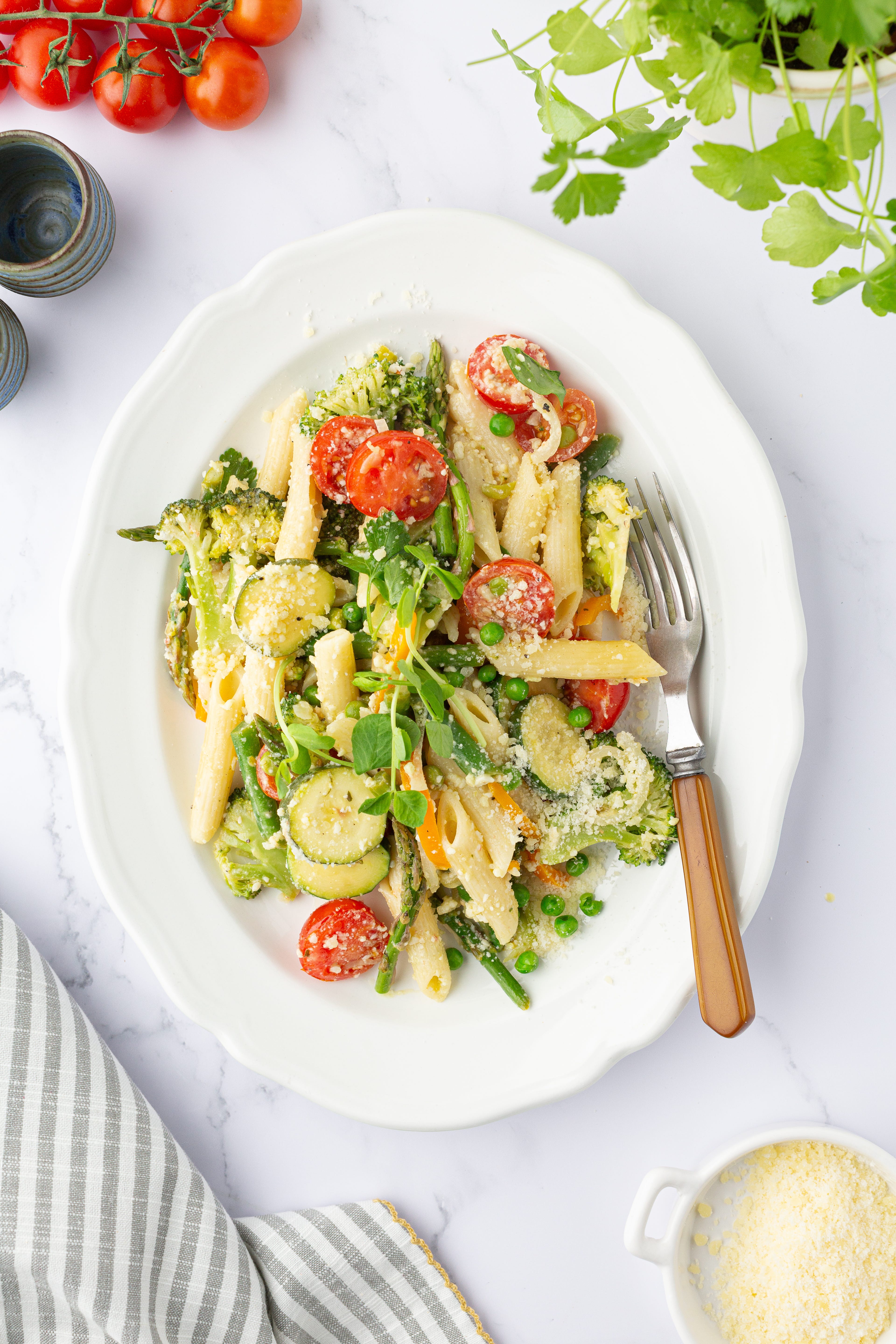
Now that we’re a few weeks into spring, it feels like the right time to lean into lighter recipes—and I’m craving anything with fresh, seasonal vegetables.
When I was first learning how to cook, a dish like pasta primavera felt completely out of my reach. Not because it’s complicated, but because cooking vegetables felt tricky—how do you keep them tender but still bright and fresh, instead of dark green and a little bit of a mess?
I also had no idea how much seasonality mattered. Or that asparagus, strawberries, rhubarb, artichokes, radishes, leafy greens, and peas all really shine in April and May (and longer, if you’re lucky).
If you can, this is the moment to seek these ingredients out—when they’re at their peak and taste like it.
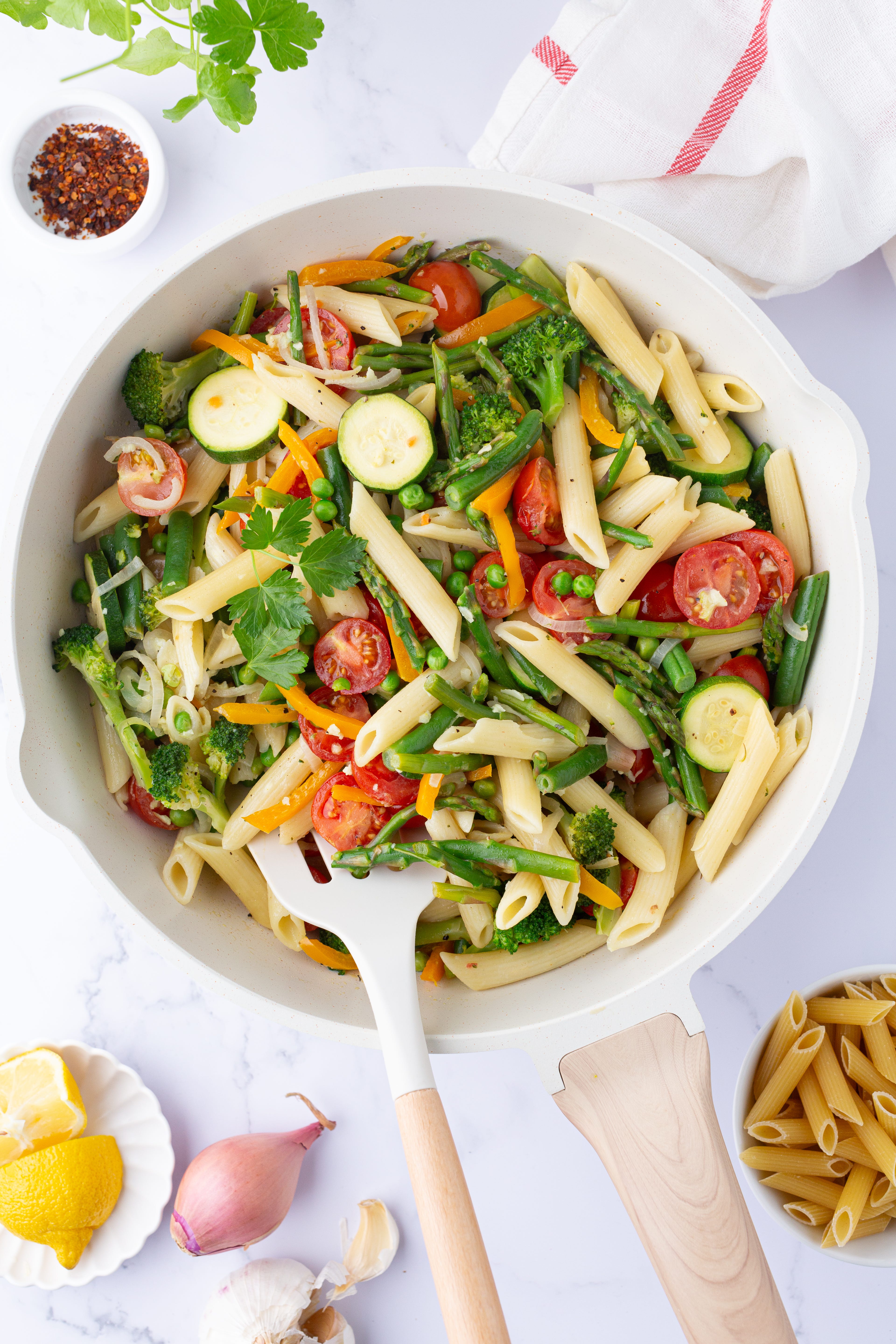
This recipe is flexible, un-fussy, and built around whatever looks best when you’re standing in front of the produce section (or your fridge, at the end of the week).
From there, it’s just a matter of cooking everything quickly so the vegetables stay bright and crisp-tender, then tossing it all together with hot pasta, butter, cheese, and a handful of fresh herbs. This is simple food, and it hits all the right notes this time of year.
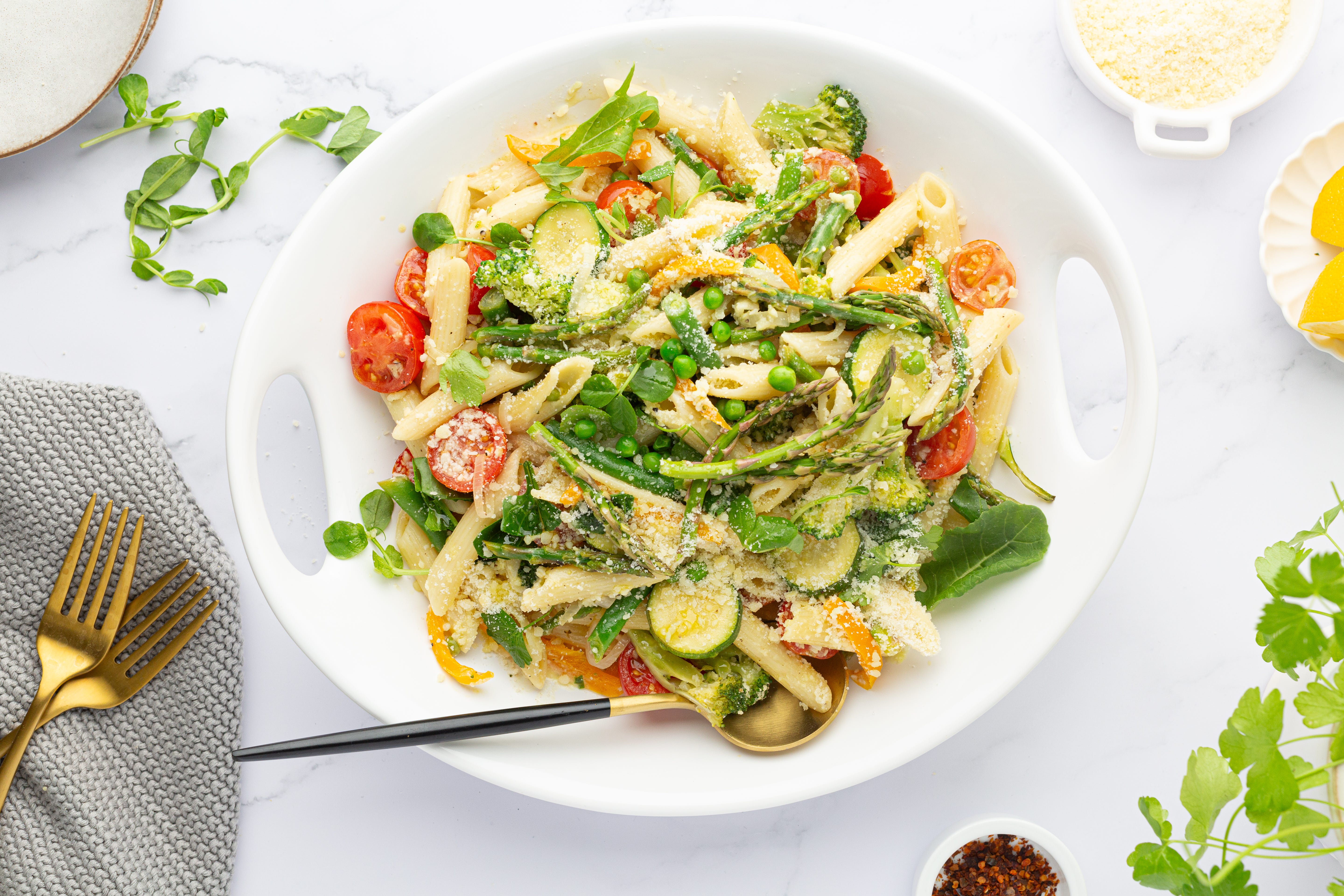
Here’s what I used this time, but you can really use any combinations you’d like:
Vegetables:
Asparagus, peas, green beans, broccoli florets, cherry tomatoes, zucchini, and an orange bell pepper
Aromatics + heat:
Shallot, garlic, red pepper flakes, fresh lemon
For the sauce:
Butter, olive oil, Parmesan, and a little Boursin cheese (optional, and cream cheese, yogurt, or crème fraîche work too). You can skip the creamy addition altogether if you want—the butter, olive oil, Parmesan, pasta water, and a squeeze of lemon make a simple, light sauce on their own.
Pasta:
Penne (but any shape you like will work)
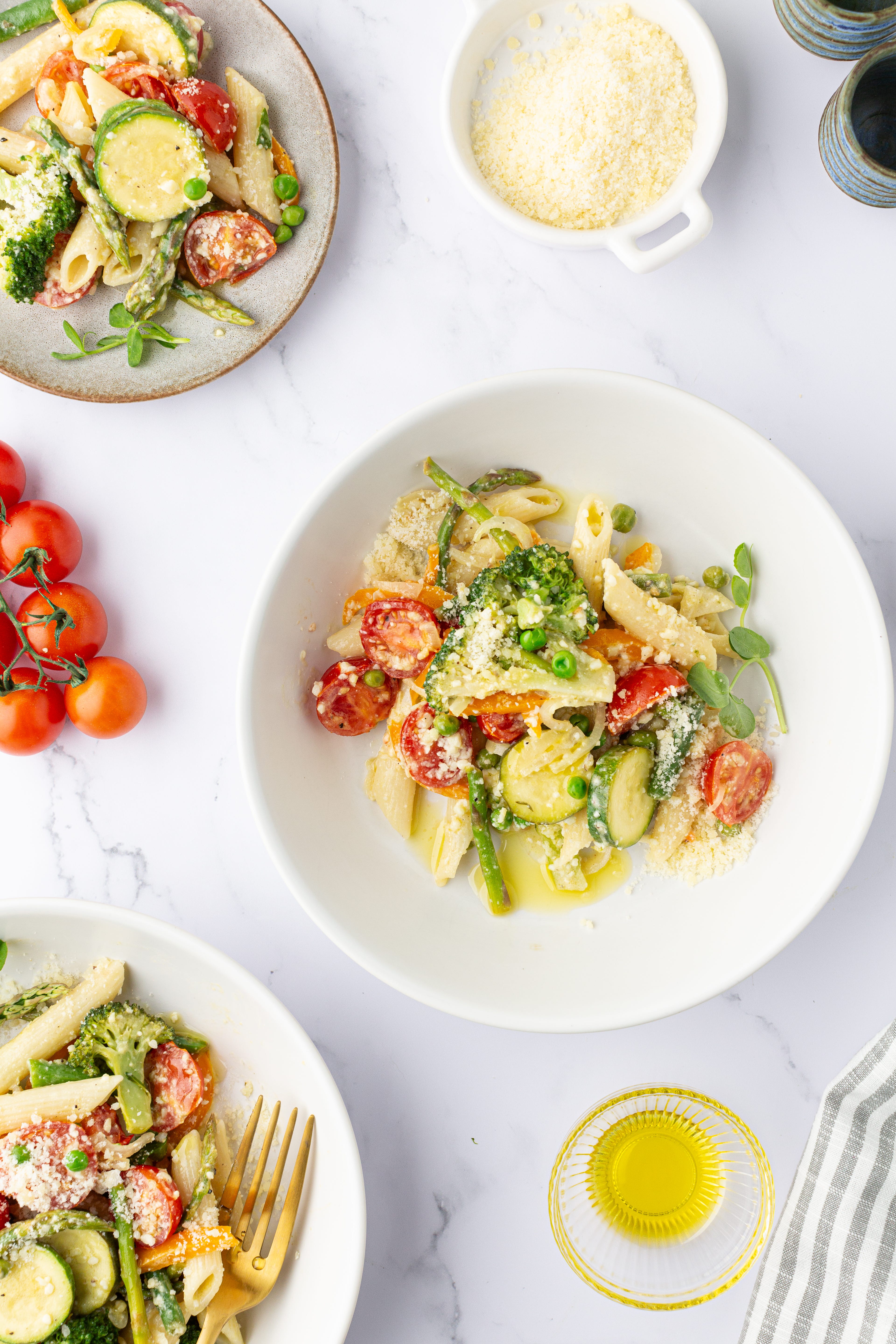
If you want to take it a step further, add something crunchy like toasted pine nuts, walnuts, or buttery breadcrumbs, along with a handful of greens like basil or peppery arugula.
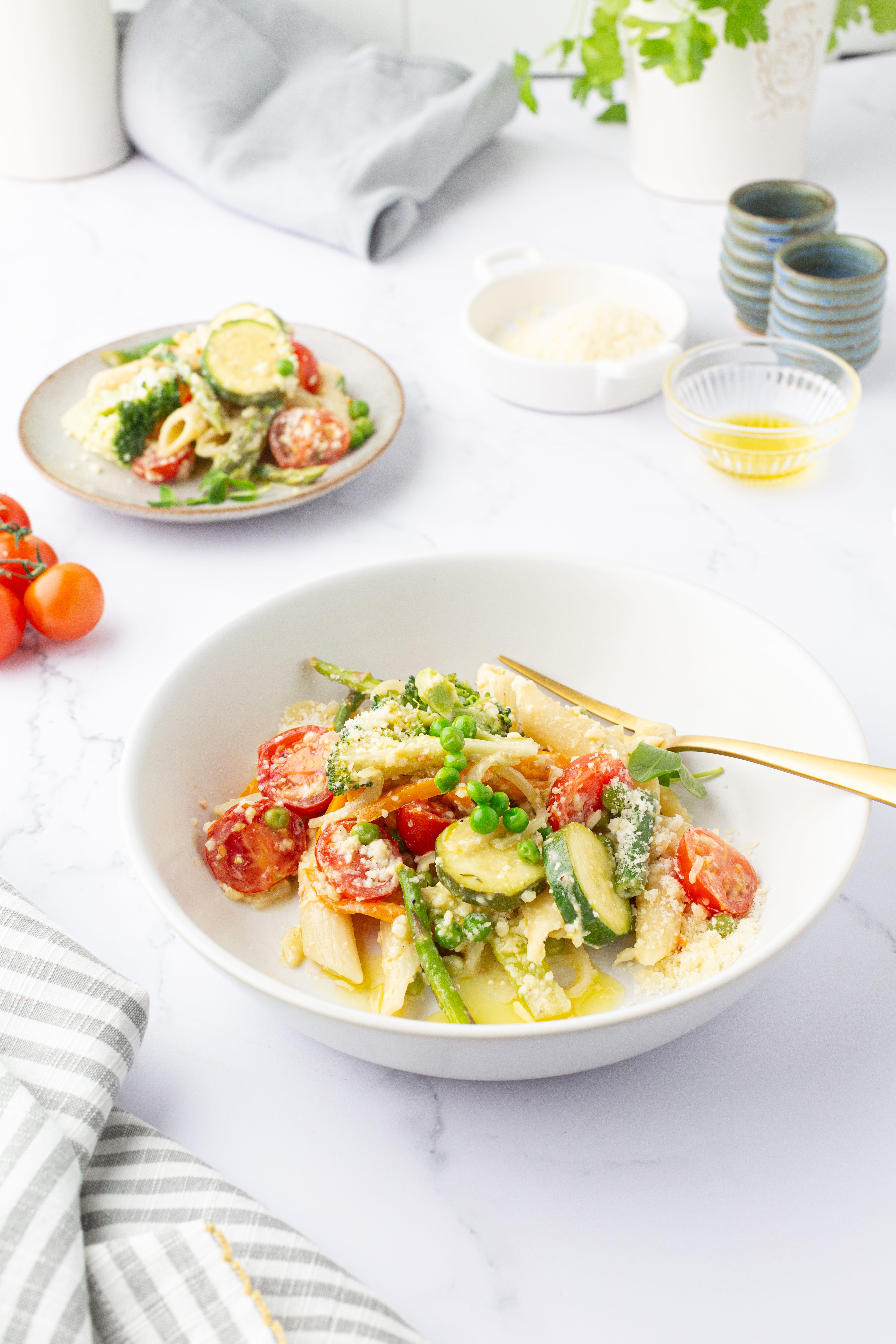
This pasta primavera is fresh, easy, and comes together without much planning. Serve it in bowls as a main dish, or alongside chicken, salmon, steak, or shrimp.
And just before serving, don’t forget a drizzle with a good, fruity olive oil and a generous shower of Parmesan—it adds a little richness and brings everything together.
Thanks so much for being here.
If you make this, let me know what vegetables you used!—I always like hearing how it turns out. I’ll see you next week.

Springy Pasta Primavera
Serves 4-6
Ingredients
Vegetables
1 bunch asparagus, trimmed and cut into bite-sized pieces
¾ cup peas (fresh or frozen)
1 cup green beans, trimmed and cut
1½ cups broccoli florets
2 cups cherry tomatoes, halved
1 small zucchini, thinly sliced
1 orange bell pepper, thinly sliced
¼ cup fresh parsley, chopped
Aromatics + heat
1 shallot, thinly sliced
2–3 cloves garlic, minced
Pinch of red pepper flakes (optional)
For the sauce
2 tablespoons olive oil (plus more for finishing)
2–3 tablespoons butter
½–1 cup grated Parmesan cheese
2–3 tablespoons Boursin cheese (or cream cheese, yogurt, or crème fraîche)
Pasta
12 oz penne (or any shape you like)
Instructions
Cook the pasta
Bring a large pot of salted water to a boil and cook the pasta according to package directions. Reserve about 1 cup of pasta water, then drain.Cook the vegetables
While the pasta cooks, heat olive oil and 1 tablespoon of butter in a large skillet over medium heat.
Add the shallot and cook for a minute or two until softened. Stir in the garlic and red pepper flakes (if using) and cook briefly, just until fragrant, about 30 seconds.
Add all of the vegetables to a large skillet with about ¼ cup of water and a pinch of salt. Cover and cook over medium-high heat for 4–6 minutes, or just until tender. Add more water, a tablespoon at a time, if needed, letting it evaporate after each addition.
Keep an eye on them—once they’re tender but still crisp and bright, they’re done.
Bring it together
Add the drained pasta to the skillet along with the remaining butter, a splash of pasta water, and the Boursin or other cheese (if using). Toss everything together until the sauce loosens and coats the pasta. Add the fresh parsley.Finish
Stir in the Parmesan, adding more pasta water as needed to loosen things up and keep everything silky.Serve
Right before serving, drizzle with a little olive oil and finish with more Parmesan.
Notes
Use whatever vegetables you have—this is very much a mix-and-match situation. Aim for about 6–8 cups in total.
The key is not to overcook the vegetables, you’re aiming for tender but still bright in color.
A squeeze of fresh lemon or a handful of fresh herbs like basil at the end adds a nice lift.